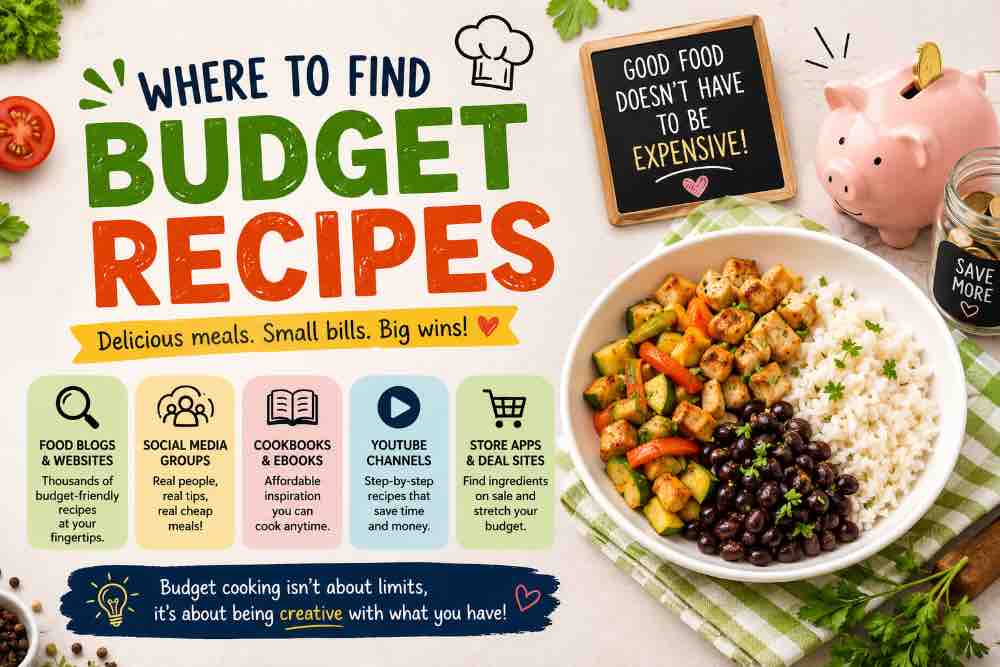
Eating well doesn’t have to mean watching your bank balance disappear faster than a plate of freshly baked cookies. Whether you’re feeding a family, trying to save money, or simply refusing to pay restaurant prices for something you could cook in one pot, budget recipes are your new best friend.
The good news? Affordable recipes are hiding in more places than you might expect.
Where to Find Budget Recipes: Delicious Meals Without a Wallet Workout
1. Recipe Blogs With Budget-Friendly Meal Ideas
Food blogs are one of the easiest places to find inexpensive recipes. Many specialize in meals that use everyday ingredients such as rice, beans, potatoes, pasta, eggs, vegetables, and chicken.
Look for recipes labelled:
- Budget-friendly
- Cheap meals
- Frugal recipes
- Easy family meals
- One-pot meals
- Meals under a specific price
- Pantry recipes
The secret is to focus on recipes using ingredients you already have. That forgotten bag of rice in the cupboard deserves a career comeback.
2. Pinterest: The Rabbit Hole of Cheap Dinner Ideas
Pinterest can be a goldmine for affordable meal inspiration. Search for phrases such as “cheap dinner recipes,” “budget meal prep,” “easy family meals,” or “cheap healthy recipes.”
Just be careful. You may enter Pinterest looking for a ₦2,000 dinner and emerge two hours later planning a homemade three-tier birthday cake for someone whose birthday isn’t even this year.
3. YouTube for Budget Cooking
YouTube is particularly useful if you prefer watching someone cook rather than deciphering a recipe that says “cook until done.”
Search for:
- Budget meal challenges
- Cheap family meals
- Student recipes
- Budget meal prep
- Frugal cooking
- Nigerian budget recipes
- Meals with five ingredients
Video recipes can also show useful techniques for stretching ingredients and reducing food waste.
4. Cashback and Savings Websites
If you’re already looking for ways to save money on everyday spending, cashback websites can also be useful when planning your grocery budget.
For example, CashbackFlip can complement your meal-planning strategy by helping you discover money-saving opportunities while you shop. You can pair grocery savings with affordable recipes and potentially make your food budget stretch a little further.
Think of it as giving your wallet a tiny bodyguard.
5. Your Family’s Old Recipe Collection
Before searching the entire internet, ask an older relative what they cooked when money was tight.
Grandparents and parents often know how to turn a handful of inexpensive ingredients into surprisingly satisfying meals. They may not call them “budget recipes,” either. They simply call them dinner.
Traditional meals based around beans, grains, vegetables, potatoes, eggs, and seasonal ingredients can be both filling and affordable.
6. Grocery Store Websites and Apps
Many supermarkets publish recipes based on ingredients they sell. These can be particularly useful because you can compare the recipe with current grocery deals and build your shopping list around discounted products.
A simple strategy is:
Check what’s affordable → find recipes using those ingredients → cook enough for leftovers.
That approach can be much kinder to your wallet than deciding what to cook first and discovering that every ingredient costs the equivalent of a small vacation.
7. Social Media Food Communities
Facebook groups, Reddit communities, TikTok creators, and Instagram food accounts can provide endless budget recipe ideas.
Search for communities focused on:
- Frugal living
- Meal planning
- Cheap cooking
- Student cooking
- Family meals
- Local cuisine
Local communities can be especially helpful because members often recommend ingredients and recipes that are affordable and readily available in their area.
8. Cookbooks From the Library
You don’t necessarily need to buy another cookbook. Your local library may have cookbooks dedicated to simple, economical meals.
Look for titles or sections covering frugal cooking, family meals, simple recipes, meal planning, and one-pot cooking.
Borrowing a cookbook costs considerably less than buying one—and libraries are excellent at helping you save money without requiring you to survive on instant noodles.
How to Find Cheap Ingredients for Recipes
Finding affordable recipes is only half the battle. The real savings often come from choosing inexpensive ingredients before you even start cooking. With a little planning, you can create tasty meals without making your grocery bill look like it has developed a personal grudge against you.
1. Start With What You Already Have
Before heading to the store, check your pantry, refrigerator, and freezer. You may already have ingredients that can form the basis of several meals.
Rice, pasta, beans, flour, oats, potatoes, eggs, canned foods, and frozen vegetables can be surprisingly versatile.
Pro tip: Make a list of ingredients you already have and search for recipes using them.
2. Buy Seasonal Produce
Fruits and vegetables are often cheaper when they are in season and widely available. Seasonal produce can also be fresher, which means you’re getting more value from your money.
Instead of deciding on a recipe first, check which vegetables and fruits are affordable and build your meals around them.
3. Compare Prices Before Buying
Don’t automatically grab the first product you see. Compare prices between different brands, package sizes, supermarkets, markets, and local sellers.
Sometimes the cheapest-looking package isn’t actually the best deal. Check the price per kilogram, litre, or unit when possible.
4. Choose Budget-Friendly Staples
Some ingredients can stretch across multiple meals. Consider staples such as:
- Rice
- Beans and lentils
- Potatoes
- Pasta
- Eggs
- Oats
- Flour
- Seasonal vegetables
- Frozen vegetables
- Canned tomatoes
These ingredients can become the supporting cast for dozens of recipes.
5. Look for Grocery Discounts
Check supermarket promotions, weekly specials, clearance sections, and digital coupons before shopping.
You can also combine grocery discounts with cashback opportunities where available. A small saving on several regular purchases can add up over time.
6. Buy Ingredients You Can Use in Multiple Recipes
Avoid buying a special ingredient for one recipe if you know it will spend the next six months staring at you from the cupboard.
Instead, choose ingredients that can work in several dishes. For example, vegetables can be used in soups, stews, rice dishes, pasta, omelettes, or stir-fries.
7. Consider Generic or Store Brands
Brand-name products aren’t always better. Generic and store-brand versions of staples can sometimes offer similar quality for less money.
For basic ingredients such as flour, rice, sugar, salt, canned tomatoes, and pasta, comparing brands can help reduce your grocery costs.
8. Buy in Bulk—But Only When It Makes Sense
Buying larger quantities can reduce the unit price, particularly for non-perishable foods.
However, don’t buy five kilograms of something simply because it is cheaper per kilogram if you’re only going to use one kilogram. A bargain you throw away isn’t really a bargain.
9. Visit Local Markets
Depending on where you live, local markets can be excellent places to find affordable fresh produce, grains, legumes, and other ingredients.
Prices can vary considerably, so comparing several sellers may help you find better deals.
10. Plan Recipes Around Cheap Ingredients
One of the easiest ways to lower food costs is to reverse the usual process.
Instead of:
“What recipe do I want to cook?”
Try:
“What ingredients are affordable this week, and what can I make with them?”
That small change can make budget cooking much easier.
Tips for Making Any Recipe More Affordable
Finding cheap recipes is only half the battle. You can often reduce the cost of ordinary recipes by making a few smart swaps.
Try these ideas:
Choose seasonal ingredients: Fruits and vegetables that are in season are often more affordable.
Buy versatile staples: Rice, beans, pasta, oats, potatoes, eggs, and similar staples can become the foundation of numerous meals.
Cook larger portions: Make enough for leftovers instead of cooking from scratch every day.
Use cheaper protein: Beans, lentils, eggs, and other affordable protein sources can replace some of the more expensive meat in many dishes.
Reduce food waste: Before shopping, check the refrigerator and cupboards. That lonely carrot hiding behind the milk might already be part of tomorrow’s dinner.
Plan before shopping: A basic meal plan can prevent impulse purchases and reduce the number of ingredients that end up forgotten at the back of the fridge.
Final Thoughts
Finding budget recipes doesn’t require becoming a professional chef or eating the same bowl of noodles every night. From recipe blogs and YouTube to Pinterest, grocery websites, family recipes, and money-saving platforms like CashbackFlip, there are plenty of places to discover affordable meals.
The real trick is to choose simple ingredients, plan ahead, make leftovers work harder, and shop strategically.
Because eating on a budget should mean spending less—not enjoying dinner less.