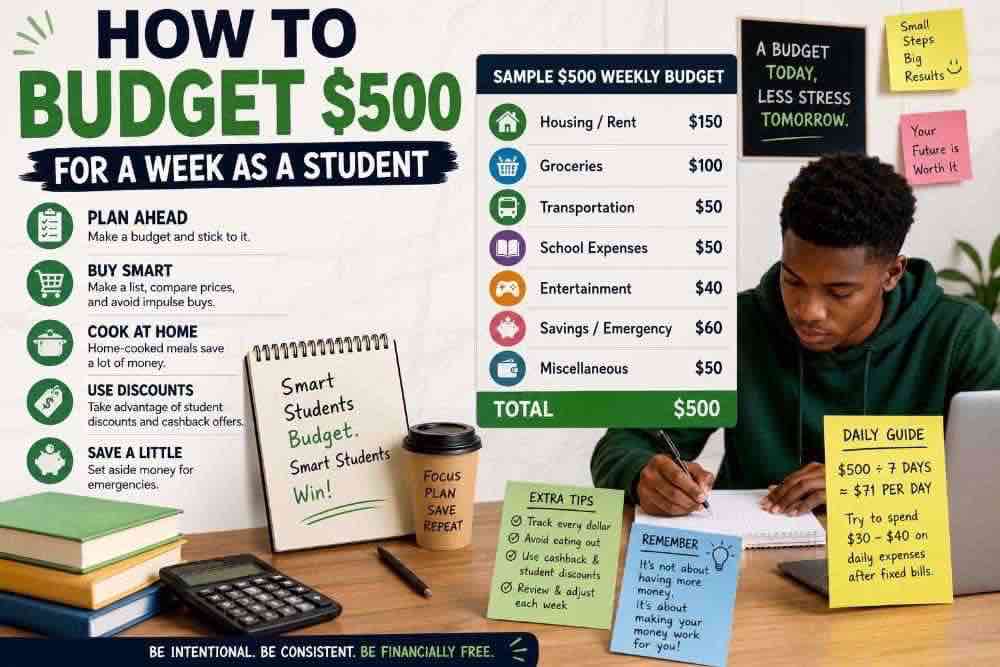
Let’s be honest—being a student with $500 for the week can make you feel like the CEO of a Fortune 500 company… right up until Monday afternoon. One minute you’re confidently saying, “I’ve got plenty of money!” The next minute you’ve somehow spent $80 on coffee, snacks, a “quick” online shopping deal, and food delivery because cooking felt like too much effort.
By Wednesday, you’re checking your banking app every 15 minutes as if the balance might magically increase out of sympathy. Suddenly, free pizza at campus events becomes a gourmet dining experience, and you start calculating whether ketchup counts as a vegetable.
The good news? Budgeting isn’t about surviving on instant noodles or refusing every invitation from your friends. It’s about telling your money where to go before it decides to disappear on its own. With a simple plan, smart spending habits, and a few student-friendly tricks, $500 can comfortably last the entire week—and you might even have a little left over instead of living on hope and leftover fries.
In this guide, you’ll learn exactly how to budget $500 for a week as a student, avoid common money traps, stretch every dollar further, and build financial habits that will continue to pay off long after graduation.
Can You Really Make $500 Last a Week?
Absolutely—but whether $500 is enough to last a week as a student depends on where you live, your lifestyle, and what expenses you’re responsible for. For some students, $500 might feel like a luxury, while for others living in an expensive city or paying weekly rent, it can disappear faster than a free pizza at a campus event.
Start by identifying your fixed expenses, such as rent, transportation, or recurring bills. Then allocate money for groceries, school supplies, and other necessities before setting aside anything for entertainment or impulse purchases. By prioritizing needs over wants, you’ll avoid the common mistake of spending freely at the beginning of the week and scrambling to make ends meet by Friday.
If you’re new to budgeting, our complete guide on how to make a budget explains how to create a spending plan that works for students, the 50/30/20 rule and other major life events.
Why Budgeting Matters for Students
Student life comes with plenty of responsibilities, and managing money is one of the most important. Whether you’re living on a part-time job, an allowance from your parents, scholarships, or student loans, every dollar has a purpose. Without a budget, it’s easy to overspend on takeout, entertainment, or impulse purchases and then struggle to cover essentials before the week is over.
Budgeting gives you a clear picture of where your money is going. Instead of wondering why your wallet is empty halfway through the week, you’ll know exactly how much you’ve allocated for food, transportation, school supplies, and personal expenses. This awareness helps you make smarter financial decisions and reduces the stress of living paycheck to paycheck.
Another major benefit of budgeting is that it helps you develop lifelong money management skills. The habits you build as a student—tracking expenses, setting spending limits, and saving consistently—can carry over into your career and future financial goals, such as buying a car, renting an apartment, or building an emergency fund.
A budget also prepares you for unexpected expenses. College life is full of surprises, from replacing a broken laptop charger to paying for an unplanned textbook or medical visit. Setting aside even a small emergency fund each week can keep these surprises from becoming financial crises.
Step By Step Guide On How To Budget 500 For A Week As A Student
If you only have $500 to last one week, you’re actually in a better position than many students—as long as you spend intentionally. The key is to prioritize needs over wants and set limits before you start spending.
1. Pay for Essentials First
Cover the expenses you can’t avoid:
- Rent or accommodation
- Groceries
- Transportation
- School supplies or printing
These should always come before entertainment or shopping.
2. Plan Your Meals
Food can quickly drain your budget.
Money-saving ideas:
- Cook at home instead of ordering takeout.
- Buy staple foods like rice, pasta, oats, eggs, and beans.
- Carry snacks and a water bottle to avoid impulse purchases.
Aim to stay around $14–15 per day on food if groceries are your main expense.
3. Use Student Discounts
Many businesses offer discounts for students on:
- Public transportation
- Software subscriptions
- Streaming services
- Restaurants
- Museums and entertainment
Always ask if a student discount is available.
4. Limit Entertainment Spending
Give yourself a fixed amount for fun—such as $40 for the week.
Free alternatives include:
- Campus events
- Movie nights with friends
- Parks and hiking
- University clubs
5. Save Something—Even if It’s Small
Setting aside $50–60 creates a buffer for unexpected costs like:
- Medical expenses
- Emergency transportation
- Last-minute school materials
Having an emergency fund can prevent you from relying on credit cards or borrowing money.
6. Track Every Dollar
Use:
- A budgeting app
- Your phone’s Notes app
- A spreadsheet
- A notebook
Recording your spending daily helps you avoid running out of money before the week ends.
Sample Daily Spending Plan For Students Each Day
With $500 for 7 days, you have an average of about $71 per day. Since some expenses (like rent) aren’t daily, try keeping your day-to-day spending around $30–40 after fixed bills are paid.
Common Budgeting Mistakes Students Make
Budgeting isn’t just about earning or having enough money—it’s about making smart decisions with what you have. Even students with a decent weekly budget can find themselves broke before the weekend because of a few common financial mistakes. Recognizing these habits can help you avoid unnecessary stress and make your money last longer.
1. Not Tracking Where the Money Goes
One of the biggest mistakes students make is spending without keeping track of their expenses. Small purchases like coffee, snacks, or ride-sharing can quickly add up.
Tip: Record every expense using a budgeting app, spreadsheet, or notebook. Seeing where your money goes makes it easier to identify areas where you can cut back.
2. Spending Before Paying for Essentials
Buying new clothes, gadgets, or takeout before paying for rent, groceries, or transportation can leave you struggling to cover necessities.
Tip: Always pay for your essential expenses first, then use whatever remains for discretionary spending.
3. Ignoring a Weekly Spending Limit
Without a spending limit, it’s easy to overspend during the first few days of the week and have little money left for the rest.
Tip: Divide your weekly budget into daily or category-based limits to avoid running out of cash too soon.
4. Eating Out Too Often
Restaurant meals, fast food, and daily coffee runs may seem inexpensive individually, but together they can consume a large part of your budget.
Tip: Cook simple meals at home and pack lunch whenever possible. You’ll save money and often eat healthier.
5. Making Impulse Purchases
Flash sales, online shopping, and attractive discounts can tempt you into buying things you don’t actually need.
Tip: Before making a purchase, ask yourself if it’s a necessity or simply something you want. Waiting 24 hours before buying non-essential items can help reduce impulse spending.
6. Forgetting About Small Expenses
Subscriptions, vending machine snacks, app purchases, and convenience store trips may seem harmless, but they can quietly drain your budget.
Tip: Review your bank statements regularly and cancel subscriptions or recurring payments you no longer use.
7. Not Saving for Emergencies
Many students spend every dollar they have without setting aside money for unexpected expenses like medical bills, transportation, or school supplies.
Tip: Save a small amount every week—even $10 or $20 can build an emergency fund over time.
8. Relying Too Much on Credit Cards
Using credit cards to cover everyday expenses without paying the balance in full can lead to debt and costly interest charges.
Tip: Use credit responsibly and only spend what you know you can repay on time.
9. Failing to Take Advantage of Student Discounts
Many students pay full price simply because they don’t ask about student discounts.
Tip: Always carry your student ID and check for discounts on transportation, software, entertainment, restaurants, and online services.
10. Not Reviewing the Budget Regularly
A budget isn’t something you create once and forget. Expenses and priorities change throughout the semester.
Tip: Review your budget every week to see what’s working, identify overspending, and make adjustments as needed.
How to Avoid These Mistakes
To stay in control of your finances:
- Track every expense.
- Prioritize needs over wants.
- Set realistic spending limits.
- Plan meals to reduce food costs.
- Save a portion of your income each week.
- Use cashback programs and student discounts whenever possible.
- Review your budget regularly and adjust it as your circumstances change.
Smart Grocery Shopping Tips to Stay on Budget
When you’re living on a $500 weekly budget, groceries can either be your best friend or your biggest budget killer. The good news? You don’t have to survive on instant noodles or skip meals to save money. A few smart shopping habits can help you eat well while keeping your wallet happy.
- Set a weekly grocery limit and stick to it.
- Bring reusable shopping bags if your store charges for bags.
- Check your pantry before shopping.
- Freeze leftovers to avoid throwing food away.
- Drink water instead of buying expensive beverages.
Students are always looking for ways to stretch their budgets, and loyalty programmes can help. If Starbucks is your occasional study spot, signing up for Starbucks Rewards could mean enjoying a complimentary birthday drink or snack when your special day arrives. It’s a simple way to save without changing your spending habits. Learn everything you need to know in our guide to the Starbucks Birthday Reward.
How Cashback and Student Discounts Can Help You Save More
Living on a $500 weekly budget doesn’t mean you have to miss out on savings. One of the easiest ways to stretch your money is by combining cashback offers with student discounts. While the savings from each purchase may seem small, they can add up to a meaningful amount over the course of a semester.
What Is Cashback?
Cashback is a reward that gives you a percentage of your spending back after making a qualifying purchase. Depending on the program, you may receive your cashback as:
- Cash deposited into your bank account
- Statement credits on your credit card
- Gift cards
- Reward points that can be redeemed later
For example, if you spend $80 on groceries and earn 5% cashback, you’ll receive $4 back. That may not seem like much, but repeated savings throughout the year can make a noticeable difference.
We have explained everything here on how cashback works, the different types of cashback available, and tips for maximizing your cashback rewards.
What Are Student Discounts?
Student discounts are special price reductions offered to students with a valid student ID or school email address. These discounts are available from many businesses, including:
- Clothing stores
- Technology retailers
- Streaming services
- Restaurants and cafés
- Public transportation
- Software subscriptions
- Museums and entertainment venues
Always ask if a student discount is available—it only takes a few seconds and could save you money.
Use Both Together for Maximum Savings
Whenever possible, combine cashback with student discounts. For example:
- Buy a discounted laptop using your student pricing and pay with a cashback credit card.
- Shop at a grocery store offering loyalty rewards while activating a cashback offer.
- Subscribe to discounted student software and earn cashback if the payment method qualifies.
Stacking multiple discounts legally is one of the smartest ways to reduce your overall expenses.
Prioritize Essential Purchases
Cashback should never be an excuse to spend more money than you planned. Focus on earning rewards from purchases you already need, such as:
- Groceries
- School supplies
- Transportation
- Textbooks
- Personal care items
If you buy something solely because it offers cashback, you’re likely spending more—not saving more.
Compare Offers Before Buying
Different retailers and cashback platforms may provide different reward rates for the same product. Spending a few extra minutes comparing offers can help you find the best deal before checking out.
Track Your Savings
Keep a simple record of:
- Cashback earned
- Student discounts received
- Total money saved each month
Seeing your savings grow can motivate you to stick to your budget and make smarter purchasing decisions.
Common Mistakes to Avoid
- Buying unnecessary items just to earn cashback.
- Forgetting to activate cashback offers before shopping.
- Ignoring student discounts because the savings seem small.
- Carrying a credit card balance, which can cost more in interest than you earn in rewards.
- Missing cashback redemption deadlines or program requirements.
Final Thoughts
Cashback and student discounts are valuable tools for any student trying to make $500 last the entire week. Used wisely, they reduce everyday expenses without requiring major lifestyle changes. Pair these savings with careful budgeting, meal planning, and smart spending habits, and you’ll keep more money in your pocket while staying financially responsible.
Frequently Asked Questions (FAQs)
1. Is $500 enough for a student to live on for a week?
Yes, for many students, $500 is enough to cover one week of expenses, especially if rent or tuition has already been paid. How far it goes depends on where you live, your transportation costs, and your spending habits.
2. How should I divide my $500 weekly budget?
A simple breakdown might look like this:
- Housing or rent: 30%
- Food and groceries: 20%
- Transportation: 10%
- School expenses: 10%
- Savings: 10%
- Entertainment and miscellaneous: 20%
Adjust these percentages based on your personal needs and priorities.
3. How much should I spend on groceries each week?
Most students can aim to spend $80–$120 per week on groceries by cooking meals at home, buying store brands, and planning meals in advance.
4. What’s the best way to avoid overspending?
Create a budget before the week starts, track every purchase, avoid impulse buying, and review your spending every day. Using cash or a budgeting app can also help you stay within your limits.
5. Should I save money even if my budget is tight?
Absolutely. Even saving $10–$20 each week can build an emergency fund over time and help you cover unexpected expenses without borrowing money.
6. Are budgeting apps worth using?
Yes. Budgeting apps make it easier to monitor your income, categorize expenses, and identify areas where you can cut back. Many excellent budgeting apps are available for free.
7. How can I lower my food expenses?
You can save money by:
- Cooking at home
- Buying groceries in bulk
- Choosing generic brands
- Planning your meals
- Limiting takeout and food delivery
8. Can cashback and student discounts really make a difference?
Yes. While the savings on each purchase may seem small, consistently using cashback offers and student discounts throughout the year can save you hundreds of dollars.
9. What should I do if I spend more than my $500 budget?
Review where you overspent, identify unnecessary expenses, and adjust your spending for the following week. Avoid trying to “make up” for overspending by using credit unless it’s a genuine emergency.
10. How can I make my $500 stretch even further?
Focus on your essential needs first, compare prices before buying, use coupons and cashback offers, shop during sales, borrow or buy used textbooks, and avoid impulse purchases.
11. Is it better to budget weekly or monthly as a student?
Weekly budgeting is often easier for students because it helps you monitor your spending more closely and make adjustments before small expenses become big financial problems.
12. What is the biggest budgeting mistake students make?
One of the most common mistakes is not tracking small daily purchases. Spending a few dollars on coffee, snacks, or online subscriptions may not seem significant, but these costs can quickly add up and throw your budget off track.